Tuesday, June 5, 2012

Les Haut de Porto-Vecchio

The welcoming committee

We booked our hotel on the web. Just after we arrived I heard the sound of animal bells and knew it was exactly the right place for us -- below our cabin perched high above the Corsican town of Porto Vecchio a dozen sheep were grazing.

Our greeters scatter

When I went in for a closeup, our greeters scattered.

Our cabin 

In Corsica big boulders are everywhere

The view from our cabin perch

Monday, June 4, 2012

Unspoiled Coast of Corsica


Northwest Coast of Corsica

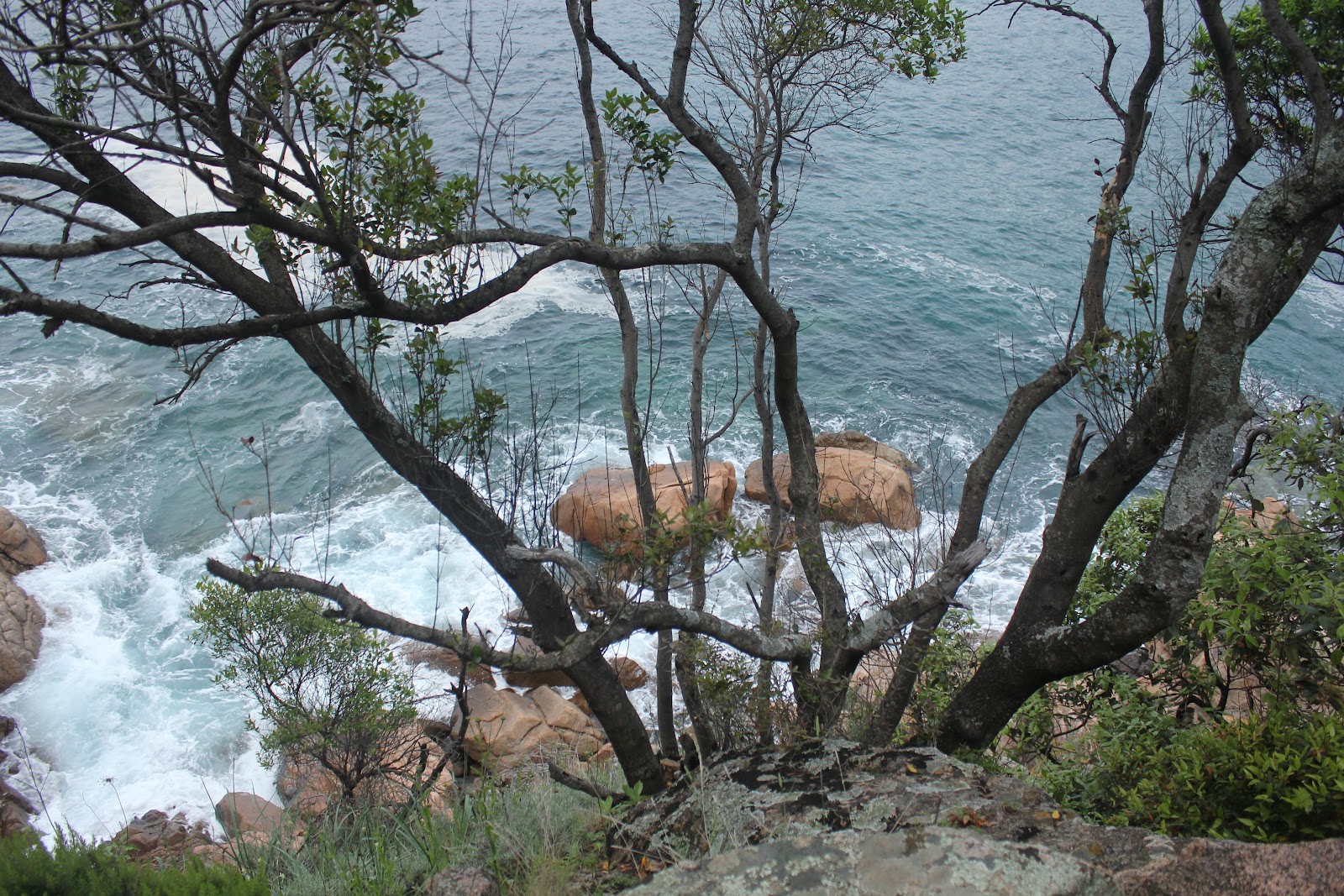
Corsica is, by intent of the locals, a largely undeveloped island. There are many stretches of dramatic seacoast available for all to see and enjoy.

Marine De Ficajola, near Piana

Western Coast, near Cargese

Western Coast, near Cargese

Western Coast, near Cargoes

Southeastern Coast, looking towards Punta di a Chiappa

The beaches on the Southern coast are pretty spectacular too!

Plage de Cateraggio

Corsica, A Chunk of the Alps Tossed into the Mediterranean

Les Calanches region of Corsica

Many of the rocks are rounded by eons of weathering

Corsica was described to me as a "chunk of the Alps that was tossed into the Mediterranean." The island is solid granite, and this geological phenomenon is nowhere more beautifully seen than a stretch on the western coast known as "Les Calanches." Towers and sheer cliffs 1,300 feet high rise from the sea, a soft ochre or a bright orange, depending on what time of day you encounter them.

Profiles emerge from weathered rock formations

It makes for an interesting and memorable drive!


The True Source of Artistic Vision

 Picasso saw possibilities?
 The inspiration for Jaws?
Michelangelo sketching the Sistine Chapel? 

Is Nature the true source of inspiration in modern art (Picasso et al) modern entertainment (Jaws) and even looking back to the Renaissance and the power conveyed by gesture (Michelangelo) or is it the personal vision of the artist?

Friday, September 16, 2011

Eisenman House II On The Block

                                                                      photo Brian Venden Brink
Eisenman House II

Peter Eisenman’s House II is on the block.

For a mere $2,800,000 you can own this 3 Bedroom, 3 Bath 2,554-square-foot 20th century architectural icon that was built in the late 1970s. The house sits on 110 acres; there is also a 4-stall horse barn with a studio apartment upstairs.

                                             Photo Brian Vanden Brink
House II, Side View 

Not only does the house have impeccable credentials – Eisenman routinely appears on lists of the “World’s Top 10 Living Architects,” --  it has been fully restored. The current owners, John and Lydia Makau, bought a ruin in 2000 that had been on the market for 10 years, and they painstakingly brought it back to life, as Gwenda Blair vividly describes in a NY Times article with the header “House Proud: A White Elephant Restored.” http://www.nytimes.com/2002/10/10/garden/house-proud-a-white-elephant-reincarnated.html

                                                   Photo Brian Vanden Brink
House II, Patio

House II, which is located in Hardwick, Vermont, is one of a series of ten houses that Eisenman designed early in his 5-decades-long career. The houses, which challenged every commonly held notion of “house” and “home,” catapulted Eisenman to architectural fame and, many would add, notoriety, as the houses had “confrontational” details like bedrooms separated by half-walls and large openings in the floors without railings or grates to prevent falling through.

                                                         Photo Cynthia Davidson
   Eisenman's Own House

In the years since he designed the houses, Eisenman’s own ideas on this subject have dramatically changed, as I discovered in an interview last spring: http://www.katherinesalant.com/columns/column268.html

For more info on the House II real estate listing and more pics: http://www.weichert.com/35620012

Saturday, September 3, 2011

The Long Goodbye to a Dearly Beloved Neighbor

The House

For 22 years I lived across the street from a modest, one-story, modernist house designed by an architect who worked in Minoru Yamasaki's office in Troy, Michigan. The house was built in 1960, and it had some wonderful features. The most notable was the central living room with two glass walls and a 4-sided clerestory window that ringed the space.

The Central Living Room

My favorite thing about the house was outside -- an enormous, sheltering walnut tree in the front yard. It always reminded me of Longfellow and another very famous "spreading chestnut tree."

The Sheltering Walnut Tree

The original owners died. Their daughter lived there for a time and then sold the house last year. The new owners decided that they could not have the house they wanted simply by enlarging this one, so they elected to tear it down and start over. 

My beloved walnut tree went down the first day.

It took four days to knock it down.

Going.....

Going....

Gone

The new owners are building a two-story house that's twice as big. It will be very green. In style it will be colonial. We hope that in time we come to love it as much as we did its predecessor.

Friday, September 2, 2011

Home Builder Contracts: Definitely NOT a New Idea

Fragment of a Roman Contract

There may have been a time in the US when building a house was a "handshake deal" between the home owners and the builder, but those days are long gone.

Today, every builder presents the home owners with a contract that details what he promises to deliver. The contract, which can be many pages long, may seem like a new wrinkle. But in fact, mankind has been writing contracts almost as long as we have been writing anything at all, said Matthew Stolper, a professor and archeologist at the Oriental Institute of the University of Chicago.

The first writing systems,  Egyptian hieroglyphs and Sumerian cuneiform, were developed around 3400 to 3200 BC. Even if written contract documents did not become common for another 200 to 400 years, that would still give legally binding contract documents a pedigree that is more than 5,000 years old.

Photo by Katherine Salant
Note: Comments and observations made during a trip to Italy in July and posted after my return.